
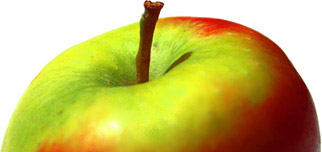
Lady Sudeley apple
Lady Sudeley is a large and attractive English early-season apple, which became popular in the late Victorian era and was grown commercially for a period. The blossom is also attractive and has some frost-resistance. It remains a common garden apple variety in England. Unusually for an early variety, the apples can be kept for a week or so in the fridge.
USDA identification images for Lady Sudeley
The identification paintings in the USDA Pomological Watercolor Collection span the years 1886 to 1942.
Citation: U.S. Department of Agriculture Pomological Watercolor Collection. Rare and Special Collections, National Agricultural Library, Beltsville, MD 20705.
Visitor reviews
- 02 Nov 2010 Kathryn MarshDUBLIN, IrelandFor the first time this year we had enough Lady Sudeley for a single variety cider - and very good it is too. Excellent balance for an early variety. We also discovered that the wood is very brittle. Lady Sudeley should not be allowed to overcrop or branches will break - despite heavy thinning in June and July. The tree in question is on M26. In the heritage orchard at Sonairte a Victorian tree on a standard rootstock crops in a more manageable way though a recent graft onto M9 also came close to breaking this year
Tree register
United Kingdom
- Andrew Collins in NEWMACHAR, ABERDEENSHIRE
- Dougas Wilson in Perth,
- Dr Dennis Bancroft in Near Rugby, NORTHAMPTONSHIRE
- Elaine Evans in Mold, FLINTSHIRE
- J Osman in Whitchurch, SHROPSHIRE
- John Leitch in Ayr, AYRSHIRE
- Katherine Law in Watford, HERTS
- Margaret Pollock in Stirling, STIRLINGSHIRE
- Rose Hoare in Surlingham, NOROFLK
Ireland
- m Hogan in Limerick, IRELAND
New Zealand
- Giles in HAMILTON, WAIKATO
Switzerland
- Helmut Mueller in Neukirch, THURGAU
Spring blossom records for this variety
2016 season
- 25th May 2016 - tree owned by m in Limerick, Ireland
Record your blossom dates in our Fruit Tree Register - more >>.
Harvest records for this variety
2016 season
- 3rd week August 2016 - tree owned by m in Limerick, Ireland
2013 season
- September 2013 - tree owned by John in Ayr, United Kingdom
2012 season
- 1st week August 2012 - tree owned by Helmut in Neukirch, Switzerland
2011 season
- 4th week August 2011 - tree owned by Katherine in Watford, United Kingdom
- 1st week August 2011 - tree owned by Helmut in Neukirch, Switzerland
2010 season
- 1st week August 2010 - tree owned by Helmut in Neukirch, Switzerland
Origins
- Species: Malus domestica - Apple
- Originates from: Sussex, United Kingdom
- Introduced: 1849
- Developed by: Mr Jacob of Petworth
- UK National Fruit Collection accession: 1941-029
Identification
- Country of origin: United Kingdom
- Period of origin: 1800 - 1849
- Fruit colour: Red / Green
- Awards: RHS AM
Using
- Picking season: Early
- Keeping (of fruit): 1 week
- Flavour quality: Good
- Flavour style (apples): Sharper
- Cropping: Good
- Food uses: Eating fresh
Growing
- Gardening skill: Beginner
- Flowering group: 4
- Ploidy: Diploid
- Vigour: Average vigour
- Attractive features: Attractive flowers
- Self-fertility: Partially self-fertile
Climate
- Frost resistance of blossom: Good resistance
Other qualities
- Disease resistance: Good
Where to buy fresh fruit
No orchards have registered as growing this variety. If you grow this and want to register please go to our Orchard Registration form.
References
- Apples of England (1948)
Author: Taylor